Saturday, June 1, 2013

In the Merry Month of June

June kicks off the busy summer season here at Hope Mountain Farm. Just sheared the first two sheep. I use the manual shears because it keeps them calmer and I don't cut them as badly, but it's a struggle anyway, and after two, I'm done for a spell. The benefit of a small-holding is the scale is right for this kind of careful, time-consuming work. Here's a funny thing, the lambs don't recognize their moms and when they're done getting shorn, they spend hours bleating at each other trying to figure it out. The lambs are about six weeks old now and have formed a pack, somewhat like unruly teenagers, running up and down the hill from the barn and finding any crack in the fence to get out and into trouble. Ah, the animal kingdom of which we are a part.

The first victims:


 Some lambs and a ewe inspecting shearing station:


The apple trees have a very good set this year, and for the first time I think I've figured out an organic system for keeping the dreaded plum curculio at bay. (See last year's post for the misguided and ill-fated venture into chemical farming in this regard.) It involves constant spraying from first petal fall onwards of kaolin clay and the use of pyganic, (made from chrysanthemum seeds), on cherry and plum trees as traps.

Northern Spy:


The garden is doing its usual great after plenty of moisture and now the first summer heat. We are behind though, with two more beds to be dug over and manured for tomato, eggplant, corn, etc.

Here some potatoes are emerging from leaf mold mulch put down just last week as a cover to protect from the last frost of the year, hopefully:


Saturday, May 25, 2013

An Excerpt From Birdman


(In honor of Memorial Day, an excerpt of Birdman, including the foreword to the second edition, copyright 2012)

Foreword – Second Edition

It has been almost a dozen years since Billy Kagan, aka Bert Smith the Birdman wandered the Irish hinterlands seeking his soul. Much has changed. The Celtic Tiger has come and gone. The world seems to have survived the passage into a new millennium, albeit semi-fractured in its consciousness and its ability to carry on.
It is instructive to look back on the world Billy was watching in those wild-eyed days.  We seemed to be perched on the edge of a yawning chasm, pursued by the ghosts of our former misdeeds, and uncertain of a future providence. Nowadays, a new generation looks to the birds, “perchers, songsters, blown by the wind and content to sit in the early and late days of the lingering sun, faith in perpetual sustenance, sharp-eyed observers of the moribund and settled,” as the waves of creative destruction crash down again on the rocks of these shores.

It is time to bring Billy forward on the bridge he foresaw being built, bypassing the architecture and snares of the old city, into a new land of opportunity. This electronic edition of Birdman is for the reader who knows that sometimes you have to step back in order to move on.

Chapter One


The countless ways of yearning, the winged and white-backed beasts, crossed the ocean behind Kagan, in hot pursuit. The Atlantic beat against the cliffs of this present citadel, laying siege to his dreams. The light of day gave a nightmarish aspect to the misted fields, the silent cobbled street with its electric cables sagging and shrieking in the wind, the three public houses, the post office in requisite green, the shop and the sharp hairpin up the hill. Across the water in one direction lay Europe, in the other America. Goat Island, the last spurs of the land’s spiny back, seemed in a winter’s dawn to have been thrown up out of the sea by an improbable hand.

“Sit down, Mr. Smith,” said Francis, the eldest brother. He rose from his chair at the small rectangular table.

“No, that’s all right. I’ll take the plate up to my room,” Kagan said.

“You can sit here if you please,” said Francis, pulling out his chair in a gesture of invitation. Murphy senior grunted an assent. Mrs. Murphy cleared her plate and Francis’s plate away from the table. The rest of the Murphys resumed eating as if on cue, satisfied that the situation with Kagan would resolve itself one way or another without impacting their ability to finish breakfast.

Kagan would have insisted on going upstairs with his food, but thought of Bert Smith, birdwatcher and student of man, and accepted the offer. He walked around the table by the steamed window, the sill with its statuette of Mary in her cloak of sky blue, so unlike the Irish sky this particular morning, and sat down as Mrs. Murphy loaded his plate with food in whiplike motions from the range.

Francis lit a cigarette, while Murphy senior directed a comment at Kagan he did not understand. He wiped his mouth in a scholarly fashion and asked Mr. Murphy to repeat himself.

“You’ll be walkin’ the cliffs for the birds this mornin’, Mr. Smith,” said Murphy.

“That’s exactly what I plan,” said Kagan.

Murphy mumbled to himself, mumbles Kagan took as tokens of disbelief, and his stomach sank. To play Smith would require more than imagination. It would take balls. Kagan suspected Smith would be of a taciturn disposition and so kept quiet, finishing his food.

The Murphys gathered in twos and threes by the front door, said goodbye to Mrs. Murphy and headed out across the lawn to the Hiace van and the Toyota Carrera on the curbside followed closely by Heidi, the yapping dachshund. Kagan observed through the open front door beyond Mrs. Murphy’s midriff as the two vehicles wheezed into action and drove off. Mrs. Murphy closed the door, leaving Heidi sniffing for remains outside on the wet lawn.

“Not a very nice day, actually,” said Kagan.

“’Tis not the day but the fish that are in it,’ said Mrs. Murphy. “You could do with a good lie-in, Mr. Smith, you look half dead. I’ll get you some more tea.”

“Call me Bert. And thank you, Mrs. Murphy.”

She poured him another cup of tea and seemed unfazed by his forwardness. Apparently Smith was an intimate, theatrical sort of man and had a winning way with older women. This disclosure, along with the breakfast, went a way towards allaying the gnawing pain in his gut, a product of pints the previous night. The beer flowing through him seemed to have eroded a large chunk of his liver.

Upstairs, Kagan gathered up the binoculars and the bottle of Bushmills, put on waterproofs, porpkpie hat and boots, all of which except for the Bushmills he’d acquired at a sporting goods outlet in Mallow on his way down from Limerick, and descended the stairs again. Mrs. Murphy was dusting down the table, Heidi sleeping in her basket by the range.

“You could do better than going out on a wet day like today.”

“Ah, but I have my duties to the birds.”

“I suppose it’s one thing or another.”

“Very true. I’m just a bird-watching fool, Mrs. Murphy.”

“I know. I know. And I’m thinking that old David Bellamy himself would give up on the birds and stay inside with the fire going on a day like today.”

“Yes, well. It’s a severe sort of calling.”

“Not for the faint-hearted.”

“No.”

“And you seem yourself a sort of stay at home man. Although there is a touch of the rough to you, as if you’d seen better days.”

“You flatter me, Mrs. Murphy.”

Heidi stirred in her basket but thought better of it as Kagan went out of the house. He walked past the sleeping village, folded up on itself in the mist, and climbed the mine road up the long hill to the top of the island, hopping a ditch gurgling in the gossamer rain and over a short wall, his boots squelching in the mud.

The rain blew in from the southwest, the direction of nightmares. Sitting on the edge of the cliff, Kagan could see the ocean far below him bashing against the rocks. Through the binoculars he scanned the waves for a sign monsters or vessels of calamity. But all he could see were swooping gulls along the lower portion of the cliffs, some cormorants skimming the water, and a group of seals further along the rocky coast. There was nothing out there but the wind and the waves as far as the eye could see. Kagan clung to his perch, pre pared well for this sort of battle, facing down of fate, manning the watchtowers of the imagination, seeking with the radar of the mind for friend or foe. They would be coming after him. They always did. They had the patience of landowners, the law on their side. All Kagan had was the waves. He wiped the water off the lens of the binoculars and put it away. Unscrewing the top of the whiskey bottle, he regretfully considered his situation.


***


Barry’s was strangely silent, although a good number of people sat at tables and three or four at the bar. Barry, a man of gruesome demeanor and appalling personality, had that morning received notice from his solicitor in Lamareen that the sale of his pub had been completed, something he’d been trying to pull off for ten years in a half-hearted attempt to change his life. But the sudden idea of a Dublin man, a stranger, getting to stand behind the counter and glare at people who came down the steps had put him in a total funk, a mood which rubbed off on the clientele, despite the fact that most people who knew Barry would not miss his service in the pub, as he was miserly, with a long memory, and unforgiving of debts.

Kagan sat at a corner table finishing his lunch and admiring Barry. He had a really ugly face, glaring and suspicious, but Kagan intuited that Barry was misunderstood, and in a different situation, under perhaps ideal circumstances, may have turned out to be a decent sort of man, respectful and considerate. Kagan’s meager awareness was enough to set his mind reeling with incommunicable insights. He sat and drank his beer, grateful for his private thoughts.

The pub’s yellow walls reverberated with the light coming through the opaque, low set windows. The brass beer taps and puddles of water on the counter reflected this mysterious incandescence, while the faces of Barry’s customers were lowered and secretive, grim expressions broken only by half-winking, jeering smiles and cackles of delight.

A man approached Kagan’s table from the bar carrying a full pint glass of beer which he set next to Kagan’s half empty one.

The man studied him momentarily while Kagan garnered his own impressions. He grinned, more like a grimace, showing a row of crooked, brown lower teeth.

You bein’ a stranger here you need to know a few t’ings,” said the man.

“What are they?” asked Kagan.

“The man who owns this pub is standing over there behind the bar. His name is Donal Barry and he’s selling the place to another man from Dublin and none of us here will be sorry to see the back of him.”

“I see.”

“Yes, I’m a blow-in myself. Where do ye come from?” he asked, poking his face next to Kagan’s and screwing up his lips.

“America.”

He stepped back, considering.

“You don’t seem a half-bad sort of American.”

“Thank you.”

Kagan tipped back his glass.

“What brings you here and what keeps you here?”

The man was still standing in an idiotic way before him. Kagan put the glass down.

“Birds,” he sighed.

“Birds it is and birds it shall remain,” said the man.

“Yeah,” said Kagan, hoping not to have to be more specific. Luckily the man seemed to require no more information. It had been perhaps an inspired choice of line.


Sunday, May 19, 2013

A Shift Towards Service in Obama's Commencement Address

It's graduation season, when seniors everywhere come to the end of their schooldays and encounter the reality of a world not necessarily waiting with open arms to receive them. Commencement speeches are filled with the advice that seems little changed from year to year. John Glenn, the Senator from Ohio and former astronaut, was the speaker at my commencement, Yale 1982. Wouldn't you know it, his message to us was to follow our passions. Not the most impassioned speaker himself, he put many people in the crowd of thousands on the Old Campus that May morning to fidgeting and fighting to keep hung over eyes open. I much prefer President Obama's advice at Morehouse College's commencement service today to focus on improving the conditions of the society by example, which seems to mark a generational change from the narcissistic, Joseph Campbell inspired New Age of the "follow your bliss" years, to a new emphasis on service and community. Young people need a challenge to wake them up, not the kind of pap that promises eternal happiness through some kind of mystical inner turning. Yes, we all have talents that are unique, and we surely do merit a special kind of individualized recognition, but the reality is that the world is not set up to accommodate 7 billion different self-sufficient streams of income based on video gaming obsessions or Tumblr pages. Much better to turn outward and think about how one's actions, and indeed even thoughts have the power to change the world for the better. St. Francis's very practical admonition in this regard is the best way to think about a vocation:

Lord, make me an instrument of your peace,
Where there is hatred, let me sow love;
Where there is injury, pardon;
Where there is doubt, faith;
Where there is despair, hope;
Where there is darkness, light;
Where there is sadness, joy.
O Divine Master,
grant that I may not so much seek to be consoled, as to console;
to be understood, as to understand;
to be loved, as to love.
For it is in giving that we receive.
It is in pardoning that we are pardoned,
and it is in dying that we are born to Eternal Life.

Saturday, May 11, 2013

400 PPM Milestone Breached - Planetary Healing on the Way?

I love Saturdays. I get to come down and make a pot of coffee and sit at the computer and try to write. It's a routine and routines are comforting. Today my wife is putting away the winter clothes into storage in the attic. That's another comforting routine because it has to do with the seasons and the passage of time but it seems like nothing has changed. The return of things gives us an illusion of control over the constantly shifting backdrop from which soon enough we will depart. There are signs of progress and now they have some procedure which promises the eternal fountain of youth in its ability to reverse grey hair apparently, which I hope they get on the market before there is no hair anymore on my head to reverse. But we all want to leave a mark, and that's why writing and teaching are so similar, both are reaching into the future, either through the direct influence on young people and the ideas they will carry forward, or through stories which will also carry ideas and images into the future. Both crafts rely on routine and repetition that can be comforting for the illusion of control that they bring. Sometimes the illusion gets shattered and your students rebel against a class you were sure would be pleasing and interesting. Or the characters in a story fall flat and refuse to evolve. Then you need to go back to the drawing board, get into some creative destruction and tear things down and start again.
Despite the walls we build against change, one of the more frightening realities is our way of life may be sowing the seeds of our own destruction. This week saw an important milestone reached with the measurement of more than 400 parts per million carbon dioxide in the atmosphere from the Mauna Loa observatory in Hawaii. Scientists estimate that this is far beyond the safe threshold of 350 ppm and continue to warn that drastic changes in our life patterns are immediately necessary. Not many people still doubt that we need to wean ourselves off fossil fuels in order to avert some unpleasant planetary changes. But the earth may have some surprises in store for us. I read recently about how scientists can now measure the way trees pump out more aerosols in warmer weather to effectively act as a negative feedback in stimulating cloud cover. And a surge of sulfates and other minerals into the upper atmosphere from volcanic eruptions may also act to dampen the effects of climate change. So perhaps the planetary intelligence, of which we are a part, may be acting to heal itself. We can only hope, and continue to hold to the routines that heal us personally and collectively.

Saturday, May 4, 2013

Let Someone Bury Tamerlan Tsarnaev So We Can Move On Already

I find it utterly depressing, reading about Tamerlan Tsarnaev and how his body is sitting in the morgue and no cemetery will accept him for burial. I don't know why, but I feel emotionally assaulted by this fact. Get him in the ground and let's move on. We're bigger than the terrorists. We're alive and it's the time of year that makes being alive the best thing that could ever happen to you.
I saw the swallows this afternoon as I was going across the field with a wheelbarrow load of manure. The telltale zig and zag and the forked wings of the two criss-crossing above me, dipping down to greet me, was one of those rare thrills that give meaning to the quote, was it Mark Twain who said, "the best things in life are not things." Okay, thank you Google. It was Art Buchwald. Still, the sights of spring, God bless them: the nourishing sunlight filling the whole line of vision in blue and green and gold, blossoms bursting on the plum, cherry, peach and apple trees, the lambs racing in a madcap pack and the horses bucking and shaking their manes in sheer joy. This is when you wouldn't want to be anywhere else. I don't post my photographs because this is a particular and special joy for me, and I'm sure others have the same feelings of specialness about their home places at this time of year. No matter where you are, the energy of the seasons is what keeps us surging, optimistic that our efforts are building to something meaningful and rewarding; the journey across the calendar year is not for nothing. The swallows are back, and I was there to see them when they got here. It doesn't get any better. Someone should have told that to the Tsarnaev boys.

Sunday, April 28, 2013

Mine Eyes Have Seen the Glory and Other Stuff

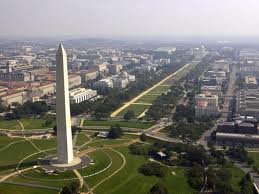
I took the kids to Washington DC for a long weekend. It was beautiful weather while we were there. The dogwoods and the cherry were in bloom. The first day i stayed in the hotel room nursing my daughter who came down ill on the flight. I read all the newspapers, including the free ones in Spanish from the stands in front of the hotel and watched C-Span and Judge Joe and a book of English short stories my wife picked up at the transfer station in our town a few weeks ago. The most peculiar show, though not the worst, was the Roamin' Catholic, from the religious channel, which depicted shrines and holy sites from around the world from a green screen while the guide in a Hawaiian shirt frolicked in front of the non-moveable backdrops and recited facts about them. Even the sacred and holy gets reduced to banality on television. But the real world was still mysterious and awe inspiring. At night my wife and I walked to the Lincoln Memorial and witnessed the parade of school trips on the steps of the memorial while the full moon shone on the mall and an older man explained to anyone who would listen that no photograph of the Lincoln statue is ever in focus because Abe has a twitch in his leg and sure enough my photos all came out a blur, but that's because my camera sucks.  The moon shining on the mall and the government buildings on the ridges made me think of ancient Roman ruins.
When you go down to Washington DC it becomes clear that we are greater than the sum of our parts. Democracy is an awesome thing when it works, and even when it's messy. And we carry forward a legacy of greatness.
The next day my son gave me a guided tour of the Air and Space Museum. He has memorized the whole thing from the Wright brothers through to the space program. Then I took him out to Annapolis to see the Naval Academy and he noted afterwards in the introductory video before the tour the use of the word indoctrination twice in regards to the midshipmen and the education they receive, and he said he never thought he'd hear that word used in a positive way. I guess he is growing up and becoming discerning and that should be a comfort to me, but ironically i am finding more of a use for words like honor and country in my elder role. But we did see the crypt of John Paul Jones carried on the backs of the dolphins. That will probably stay with me for a while.

Saturday, April 20, 2013

Sweet Caroline - We''ll Sing it Again


Reachin out, touchin me touchin you
Sweet Caroline
Good times never seemed so good 

And then came the bombs, the one two punch wiping out the illusion of harmony and love.
Why'd they do it? Two brothers from the neighborhood, all-American Chechen kids, living the dream.

Beside all the usual bromides, this is one truth that seems self-evident - for pain and suffering everywhere, there are no easy answers. But the hand of God is in the Boston Marathon tragedy that has swept us up this week. The evidence is in the excellence of the characters - the victims: Lu Lingzi, a 23-year-old Boston University student from China; 8-year-old cherub Martin Richard; and 29-year-old spectator Krystle Campbell; the heroic rescuer Carlos Arredondo in his cowboy hat and his flawed, haunted past; the injured Jeff Bauman who helped identify the bombers after his legs got blown off; the fallen MIT security cop Sean Collier; the transit cop injured in the firefight Richard Donohue, with a master's degree from the University of Limerick; the thousands of police fanning across Watertown house by house and the millions of Bostonians sheltering patiently throughout the day; and finally the brothers Tsarnaev - fallen angels, with so much promise and talent, but lured by the siren call of violent, apocalyptic jihad to kill and maim their neighbors and turn on Sweet Caroline, the city that had given them refuge and a chance to build meaningful lives.

Why do we need tragedies on a massive scale to bring forth the best in us? As a writer I try to show up the beauty and heroism of everyday life, but then something like the Boston bombings and the swirling passion play that comes in its wake shows me that the true artist is God and days like last week are the window He opens to allow us to recognize the truth in all its fullness, that we are alive as an entity, a humanity joined in our suffering. If only there was a way to underline our higher natures in the routines of our normal lives. If only every day was a crusade that joined all of humanity in a common cause.